On the gaa

My first impression was grey. The tall block of flats on the Seymour hill estate in Belfast; my new home on the fortuitously numbered ‘Twelfth’ floor loomed high above, a slightly darker shade than the sky. The red, white and blue kerbstones provided the only colour and my Zimbabwean childhood seemed very far away. I learnt early on not to trust first impressions. Over time my eyes adjusted and I saw other hues, and when the sun shone just how magnificent everything was. I was grateful for this place, for my new home, for the opportunities I now had but mostly I was struck by the kindness of strangers. When I got the bus to school people would ask after my grandmother, comment on the weather, quiz me on what Africa was like. One time, when I was in First year, a man who was drunk followed me up to my seat and sat next to me mocking in a loud, exaggerated accent, how I’d said “Excuse me” when I passed by him. He scared me and I started to cry. Two elderly women told him he should be ashamed of himself and the bus driver stopped the bus and made him get off. One of the women held my hand all the way to my stop, getting off with me.

A few years later we moved to the mixed Ormeau Rd, which I naively thought reflected more my experience and outlook, until much later when a chance encounter with a Fermanagh man outside the ‘Duke of York’ changed everything.

The Belfast pub, most notable for its murals and insta-worthy suspended umbrellas, was where I first met Fergal Sherry. Like so many Irishmen, he was as argumentative as he was charming, and I loved him immediately. It was many weeks before I would see him again because he was always at Gaelic football training or matches. An amateur sport I had hardly heard of, I assumed he was just avoiding me, until I discovered almost nothing comes between Gaelic Football and anything else. Declining an invitation to a wedding is fine if there has been a birth, a death or if a match is scheduled the same day (the latter arguably the most acceptable.)

I knew he liked me when he brought me to a match to watch him play. I had heard of red cards and yellow cards, but not black cards. When I asked about the one he received during that first match, he told me these were issued when a player was too good and had to be replaced with someone less talented in order to restore balance – and nothing at all to do with that ‘conversation’ he’d had with the linesman…

County flags were another novelty. Somehow by now I had lived more of my life in Northern Ireland than out of it and yet was completely oblivious to county insignia. I had also never heard of Croke Park. This is not a place, it’s a pilgrimage. I made the mistake of asking after we were married what the best day of Fergal’s life was, curious as to which of our many milestones ranked highest. In that honest space somewhere between awake and sleep he murmured 2004, the day Fermanagh beat Armagh. The birth of Jesus gave rise to B.C. and A.D. – Fermanagh’s run that year became a similar time marker from which all events are measured.

A few years after I was elected to Belfast City Council he decided he would finish his career at “home”. Hours on the road to training, back to Belfast for work, down again for matches seemed madness to me – but when I mentioned this to any GAA person it was acknowledged with a solemn nod of respect; that was how it should be.

We’d been married in Clones, home to St Tiernach’s Park, the stadium Arlene Foster and the late Christopher Stalford attended to watch Fermanagh play Donegal in the 2018 Ulster Final. I was there that day, green and white entwined wool wrapped around my head. The welcome they received was warm and the hope was palpable. That day felt like a new beginning for Fermanagh perhaps, and political attitudes here.

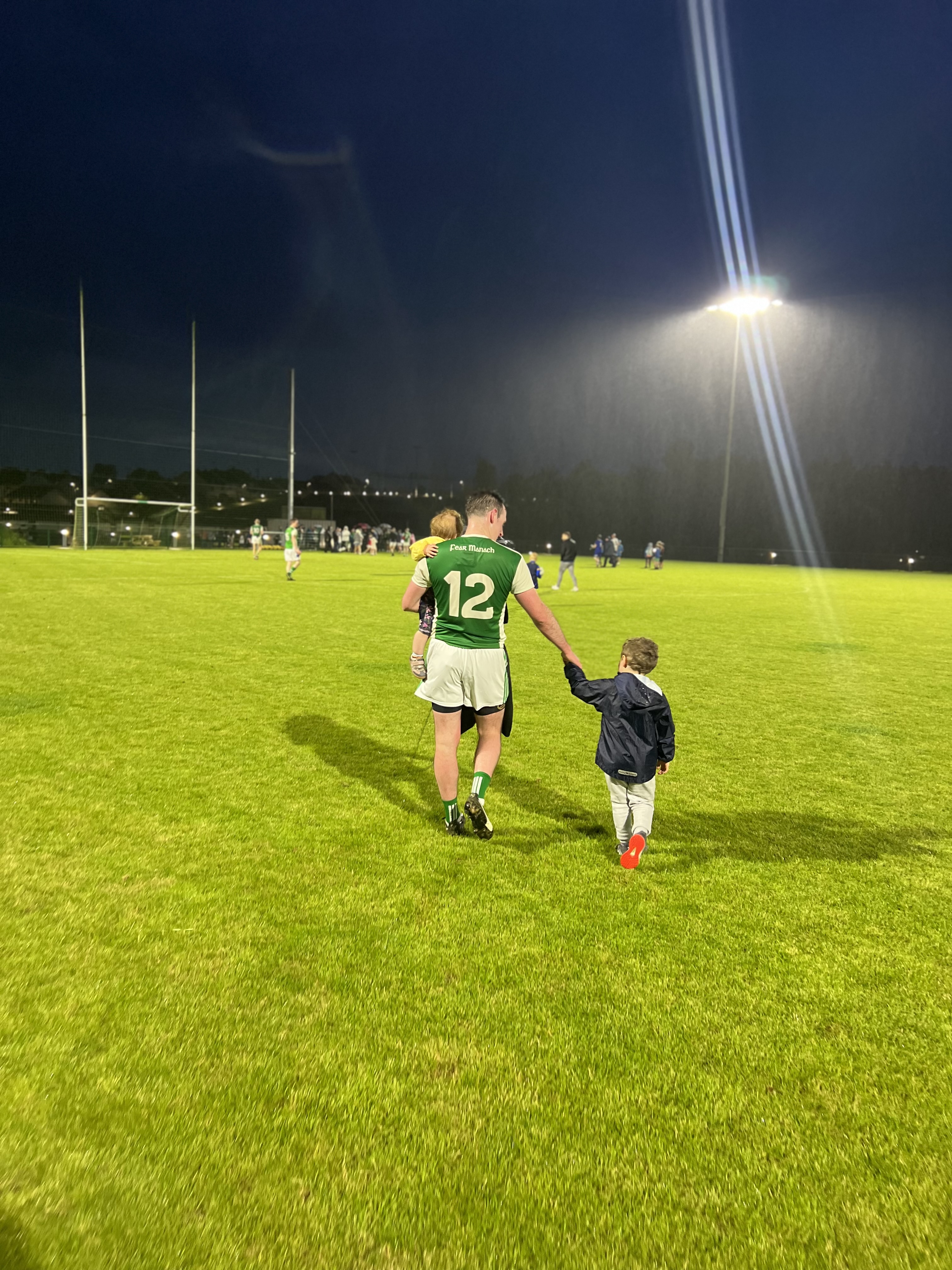
The year Aghadrumsee won the Junior Championship and reached the Ulster semi-final was the year I learnt I could go half an hour without breathing. When I became the Lord Mayor of Belfast the commute became difficult for Fergal and impossible after our second child was born and I was now an MLA. Despite having threatened to retire since I met him, Fergal plays when he can for St Brigids in South Belfast; a GAA home from home. As the time draws closer I begin to feel what it will mean to him to hang up his boots. The GAA isn’t just a hobby, it’s not just a sport, it’s been a way of life. It’s community.

Someone commented on Twitter (I don’t think I ever will be able to call it ‘X’) how astonishing it is that I lived in Belfast since I was 12, yet my first experience of the GAA was when I met Fergal in my 20s. They’re right. Other comments suggested my ‘true colours’ had been revealed – and I don’t think they meant in terms of the green and white of Fermanagh. I didn’t come from this place – this culture. But its mine now. That doesn’t mean I’m choosing. As a politician my greatest hope is that our children will have a future where all aspects of the varied culture here can be embraced and respected – and despite the political dysfunction there are examples of us moving that way, all around us.

I know what I have experienced as a latecomer to the GAA, the joy it has given me. I am so glad my children will grow up to value a sport which at its core is about people. And as a wife and mother I’m also glad my two got to see their brilliant dad in action (as part of a ‘Fermanagh legends’ team no less!), and one day I fervently hope they’ll share in the same joy with theirs.

First published in the Impartial Newspaper August 2023
Home

11218071_10153984663536494_2102720445230283380_n

The drive way was exactly as I remembered – albeit a little overgrown. There was a hut by the gate and a woman emerged, rubbing her eyes. It was the holidays but the now dilapidated buildings gave the impression the school had been closed for many years. The driver spoke to her in Shona, gesturing at me – she went to school here, she wants to take a look. She eyed me suspiciously, and then the gate was opened.

It felt like a dream. Seventeen years since I had left and so much had changed. My parents had moved here so their children would grow up free from the shadows of troubles, and they were inspired by the newly independent Zimbabwe. My mother (the daughter of anti-apartheid activists) was seduced partly by its proximity to South Africa, but mainly by the political hope the new country offered.

My boyfriend had planned this, he wanted to leave me back he joked. And here we were now – driving slowly through the school. So much I hadn’t realised had been tucked away in my mind, snippets of conversations, faces l thought forgotten, coming to the fore with force, almost winding me. That was the swimming pool I told him – the once white painted walls had sparkled in the sun, but not anymore.

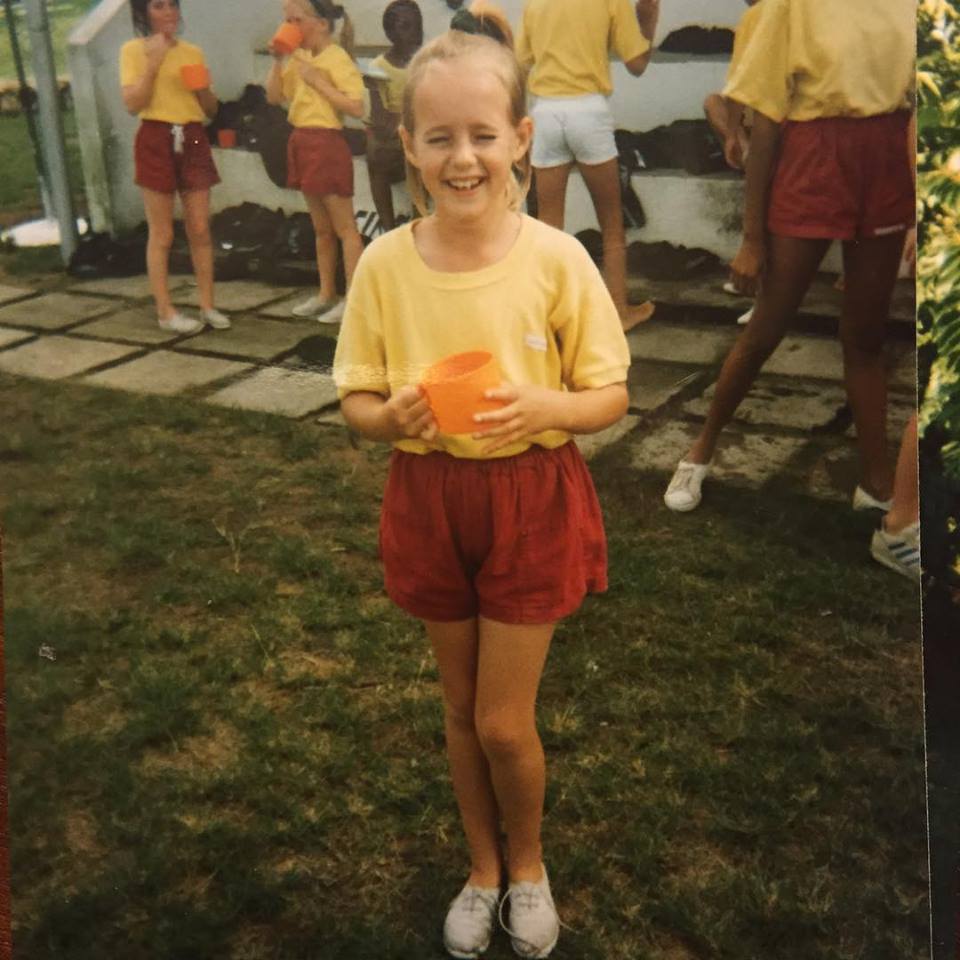
There was the hockey field. I had been the captain, not due to skill (I never scored a goal in my life) but it was an elected role and I was chosen after I bought everyone on the team sweets. Destined for politics my mum would smile. Every single afternoon we would do sport, everyone hated athletics “A little bit of pain never killed anyone” our safari-suit wearing headmaster would bellow, as he chased us down the red dirt cross-country roads on his motorbike. Pain may not kill you, but we would learn other things could.

“Netsai’s mum died” my friend had said one afternoon, when we were sitting on the side of the hockey field. Bonded by our mothers’ willingness to write notes to get us out of sport.

“How?” I asked

“Tokoloshis”

Evil spirits that I didn’t really believe in – but wouldn’t say said out loud just in case they were listening. So I nodded.

I can’t remember when the new word “war veterans” entered our vocabulary, but it was round about the time N’s dad started carrying a gun. There were squatters on their farm and she was scared. And not long after that Mr Stevens, whose kids went to the school, was shot dead by a gang of men. They were retaliating after his workers had chased them off his farm.

We drove past the old sanatorium which now had weeds growing from the window. The san was the place you went for muti, to be made better. I remembered how when it rained the matrons made us do cross-country in our swimming costumes so our sports kit wouldn’t get mouldy. I would often come down with something very serious on days like that, and would escape to the san with a book hidden in my jumper. I discovered the true happiness of being tucked up with a book and a cup of cocoa in a high hospital bed, listening to the rain thunder down upon a metal roof – knowing your classmates were running. Outside. In their swimming costumes.

Opposite the san, the swings had gone but the old tree which had claimed countless bones stood strong – the only thing which had.

I wanted to show him the old school hall.

The doors were all closed but here the latch had worn and a sharp tug set it free. The red velvet curtains on the stage were stained and frayed, a hole in the ceiling directed a shaft of light on the floor – once gleaming and polished, it was now covered in dust. The very same portrait of President Robert Mugabe hung at the back of the room and I remembered how we sang the national anthem every morning in this hall.

I had lost the school spelling bee to Cara Stockil on that stage, because I couldn’t spell bicycle.

We used to have Christian Union every Tuesday night here. When I started boarding in Grade 7, I told the matron I couldn’t go to Christian Union because my family didn’t believe in God. So she called for the teacher in charge, who called for the deputy headmistress, who called for the headmaster. It was agreed I either go to bed at 7pm when everyone went to Christian Union, or I go with them. I boycotted it for one week. But the next morning heard my boyfriend (who I had never actually spoken to) had asked where I was. So I caved. The next week I got to play the leper, who touches Jesus’ robes and gets cured, and everyone applauded – from then on every Tuesday at 7pm I was a committed Christian.

Some evenings we would sneak out of prep to play tennis before the sun set. In Zimbabwe – where corporal punishment was very much still a thing – rules were not made to be broken; but mitching homework for sport was never frowned upon. The headmaster’s house overlooked the courts, and Mr Botha who was sitting on his veranda drinking a beer called out “How’s your mum Kate?” – he knew it was just the two of us now. “Good sir” I said, “she’s coming to visit tomorrow afternoon if she gets fuel” – “Don’t hold your breath” was his response. There had been shortages for months. On hearing reports of petrol Lorries arriving in Marondera, my mother drove to town on the last of her tank. She waited for two hours in a queue and when she got to the front was told there was none left. Returning home she learned there was a power cut, so in a dark empty house she reached for the phone – just to hear the voice of another human being – and she found the line was dead. Getting into bed with a bottle of gin she decided it was time for us to go.

“They’re waiting for us” He said to me and I came back into the moment. How strange, I thought, to be here in my old world, with him. And now it was time to go.

I had been excited to go – to see my new life. To have family. But as the years passed I would occasionally catch the sweet scent of the Jacaranda trees in bloom, or feel burning gravel under my feet. I would remember nights in the dormitory when we whispered about boys from under our counterpanes and snuck out into the courtyard to gaze at the stars. I would remember the morning haze of the Chimanimani Mountains, canoeing down the Zambezi. I would remember the other nights when our whispers turned to worry – fears of the future. The rumours and tension that had slowly eased their way into our integrated world unnoticed – and with their arrival taken the last moments of our childhood. Some days the sadness of the home I had lost would overcome me. And I would feel broken.

Riverdale House was a misleading name for the grey tower block located on the Seymour hill estate. I had imagined a cottage and fields with sheep. When we arrived I looked at my mum and she tried to smile reassuringly. But we both knew what the other was thinking. This wasn’t home. The red, white and blue painted curb stones were not in fact representative of a large French community living in Dunmurry. A boy with acne who got the school bus asked me if I wanted to go into the forest with him and his friends, I did not. I watched every Doris Day film that showed on channel 4 that summer, too afraid to venture beyond the balcony of the 12th floor. No adventures wanted here. When the 90 year old arsonist from the building opposite set fire to Riverdale for the second time my mum decided, once again, enough was enough. We moved to Sunnyside Street where a Georgian piano player lived next door and when she practiced we imagined ourselves through time and place, sitting on the veranda as dusk settled, listening to my sister play.

I had escaped to London with no intention of returning to Belfast. But each time I came back to visit my mum I felt relieved. It turns out that I missed her, that I wasn’t as cosmopolitan as I hoped and really, I just wasn’t very good with change. So I moved back, unsure of who I really was or where I really belonged. In that emptiness came the space I needed to make sense of my life, to find direction. I learnt to be grateful for my weird, magical, African childhood. I began to see that the trauma of leaving, was nothing like that of classmates – who didn’t have the socio-economic privilege I had – who were denied that opportunity; who had to stay. I had witnessed the brutality of inequality, as my grandparents had; I had seen the devastation that is borne from the ashes of democracy. I knew that no good comes from division in any part of the world and I wanted to do something that mattered. And so I went and found it, and along the way I also found a Fermanagh boy with blue eyes who made me laugh and feel safe. And I thought maybe change is not so bad after all.

That evening as we sat on a kopje, sun setting over the land where I was born I acknowledged the profound effect leaving here had had on my life, it had taken almost two decades, but piece by piece I had come back. So when he asked me… I said yes. And in that moment I knew, I was home.


A letter to my grandmother

I was asked by the lovely people at second-store.com to write a Galentine’s Day Letter to a person who had inspired me to become the woman I am today – here it is:   

The last time I saw you I sat and stroked your hand: fragile, grooved with veins and age. You didn’t know me anymore. Lost in the mist. But I knew you – my grandmother who sent airletters, gave awful presents and couldn’t cook. You loved stories, a gift you passed down the generations. Because of this my childhood was enchanted, where magic and wonderment still existed – and I grew up knowing I could become anything I imagined myself to be. When the walls of my childhood came crumbling down, it was your daughter – and my imagination – which kept me safe.

What’s strange is that when I think I of you, which is surprisingly often given how little I actually knew you, I think of the you I didn’t know; long before the mist, before even me. Your grandmother was in the Black Sash, my mother would tell me. A woman’s organisation which campaigned against the erosion of human rights in South Africa. You couldn’t hold public meetings, so you would protest against apartheid individually. Black sash draped around you mourning the death of democracy. I’d read about this later, how though you were largely protected by your racial privilege – you were still vilified by many. Once you stood silently protesting in Cape Town when a man spat at you, and then a passing woman came and wiped your face. Women can change the world as much as men.

You used to say “Do the next good thing”, mum would tell me. I wonder what you’d make of our world now, you who have seen the devastation that is borne from polarisation. In Northern Ireland we’ve had no government for two years and people still fight for rights: a raped woman cannot have an abortion the way women in the rest of the UK can, same sex couples here are the only ones on these islands who can’t get married. As Brexit looms we hurtle towards more division, more barriers – the threat of eradicating the important work of so many for so long… and I feel helpless.

You taught my mother and she taught me the ability to think beyond ourselves, to see “others” as people and to imagine a better world. I got involved in politics to be part of the solution, not the problem – and as I try to hold onto my hope, I think with gratitude and pride of you and all the women who came before us, making it that much easier to do the next good thing. And how our job now is to do the same for those who will follow us.